In addition, the village still preserves many Han-Nom cultural heritages closely related to the fishing industry. This is shown in the worship statues, altars, parallel sentences and inscriptions on the great bell.
Not only that, Dinh Van Thuy Tu is also recognized as an ancient relic that once received the royal decrees of great Nguyen Dynasty kings. During the feudal wars, Nguyen Dynasty generals were saved many times by whales at sea. Currently, the temple is preserving about 24 royal decrees of the following kings: Tu Duc, Thieu Tri, Duy Tan, Dong Khanh, Khai Dinh, Duy Tan. Of which, King Thieu Tri bestowed 10 royal decrees, which is rare compared to other relics in Vietnam.
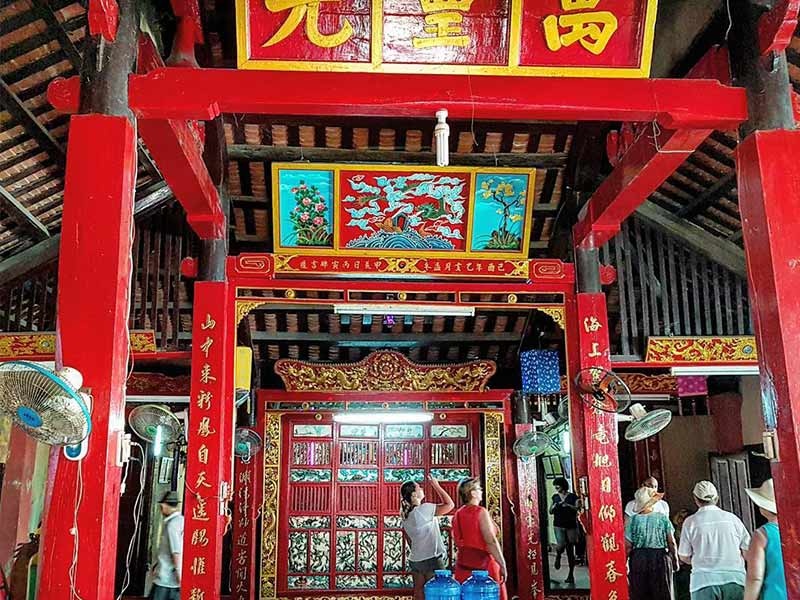
Unique architecture at Van Thuy Tu palace
Dinh Van Thuy Tu Binh Thuan has a "four-pillar" design, which is shown in the rafters, purlins, and columns that all start from the top of the four pillars. In the temple, good types of wood are used, carefully assembled, and carved very delicately.
Outside campus of Van Thuy Tu
This place has a very large campus with an ancient style. The highlight of the campus is Ngoc Lan Holy Land. This is the largest area in the campus and is used to bury whales when they drift in from the sea.
Interior architecture of Van Thuy Tu Palace
From the outside, entering the inside, in the middle of the temple is the place to worship the Nam Hai giant clan Ngoc Lan Ton Than (Mr. Nam Hai). On the left is the worship of Thuy Long Thanh Phi Nuong Nuong Ton Than (goddess of water). On the right is the worship of Hy Hoang Thai Hieu Tien Su Ton Than (ancestor of agriculture and fisheries). The area behind is the place to worship those who contributed to the discovery, building of villages and temples. In addition, next to the main hall is a temple to worship Quan Thanh.
Admire the largest whale skeleton in Southeast Asia
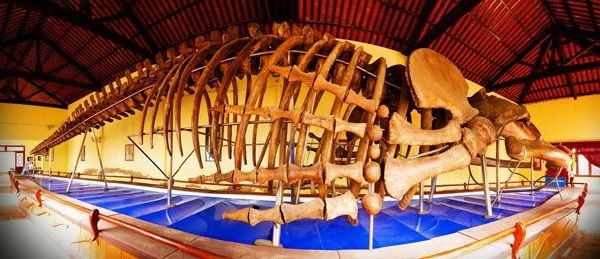
Dinh Van Thuy Tu is not only the largest and oldest temple in Binh Thuan, but it is also known for having the largest whale skeleton in Southeast Asia. According to folk legend, after Dinh Van was built, a very large whale drifted ashore right in front of the temple. The fishermen in the area were mobilized together to be able to bring the whale into the temple for burial.
The whale skeleton is almost completely preserved, weighing 65 tons, measuring 22 meters in length and is believed to be a gray whale. This skeleton is currently 100 years old.
Learn about whale worship
Coming to Dinh Van Thuy Tu Binh Thuan, visitors also have the opportunity to learn about the custom of worshiping Whales and the festivals and rituals associated with fishing beliefs such as: the ceremony of placing the whale's jade statue in the temple for worship (the small whale is after 24 months, the big whale is after 36 months); the burial ceremony of the whale's body when it is washed ashore in front of the temple; the spring ceremony takes place on February 20-12; the early season fishing festival takes place on April 20-21; the fishing festival takes place from June 19-22; the fishing festival for the end of the southern fish season takes place from August 20-21 of the lunar calendar.
These festivals and rituals have quickly become a common festival of the Phan Thiet fishing industry, attracting a large number of fishermen. This is also an opportunity to show the people's respect for the god of the South Sea and hope that he will always bless and protect their fishing activities, ensuring good luck, safety, and a full boat of fish and shrimp.
Dinh Van Thuy Tu is not only a place to worship the ancestors of the fishing profession but also preserves many valuable artifacts related to the history and development of the fishing community. If you have the opportunity to visit Phan Thiet, Binh Thuan, come here to see with your own eyes the largest whale skeleton in Southeast Asia.